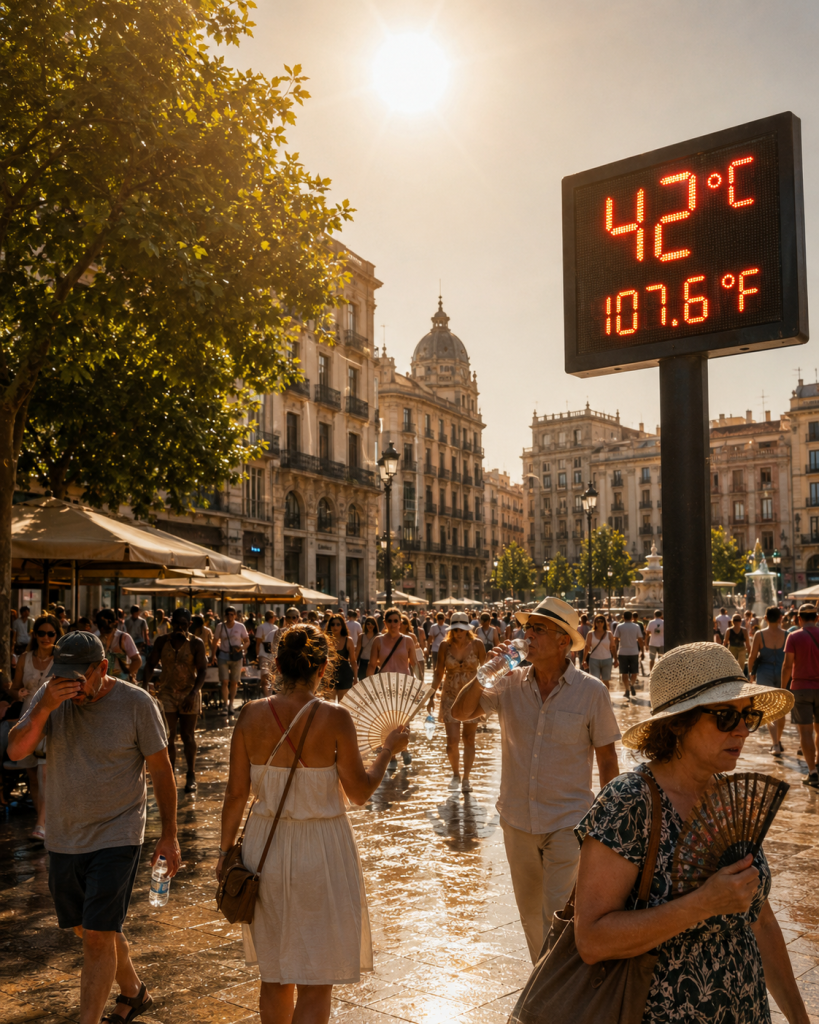
Extreme heat is once again placing public health, healthcare services and urban infrastructure under severe pressure across Europe.
At the end of June 2026, an exceptional heatwave affected large parts of the continent, breaking temperature records and increasing risks to human health, ecosystems, infrastructure and labour productivity. The event was accompanied in some areas by worsening drought, violent storms and heightened wildfire risk, demonstrating how climate-related hazards can interact and create compound pressures on communities and public services.
Following the heatwave, the World Health Organization Regional Office for Europe warned that more deadly weeks of extreme heat may still lie ahead. WHO/Europe also highlighted a major preparedness gap: fewer than half of the countries in the WHO European Region currently have a national heat–health action plan.
Extreme heat is often described as a “silent killer” because many heat-related deaths are not immediately recognised as such. High temperatures can worsen cardiovascular, respiratory, kidney and metabolic conditions, while prolonged hot nights may prevent the human body from recovering. Older people, children, people with chronic illnesses, outdoor workers, socially isolated individuals and people living in poorly cooled buildings face particularly high risks.
The latest events reinforce the importance of moving from emergency response to systematic and preventive heat–health planning. Effective action may include:
• heat-health early-warning systems linked to clear public-health guidance;
• identification and targeted support of vulnerable populations;
• cooling centres and accessible information on safe indoor spaces;
• climate-resilient hospitals, care facilities, schools and public buildings;
• urban greening, shading and heat-sensitive spatial planning;
• coordination between health authorities, municipalities, emergency services and community organisations; and
• monitoring and evaluation of whether adaptation measures are reaching those most at risk.
In June 2026, WHO/Europe published the second edition of its Heat–Health Action Plans Guidance, providing an updated framework for countries, regions and cities to prepare for and respond to extreme heat. The guidance emphasises coordinated governance, timely warning systems, protection of vulnerable groups, preparedness of health and social-care systems, long-term urban planning and effective risk communication.
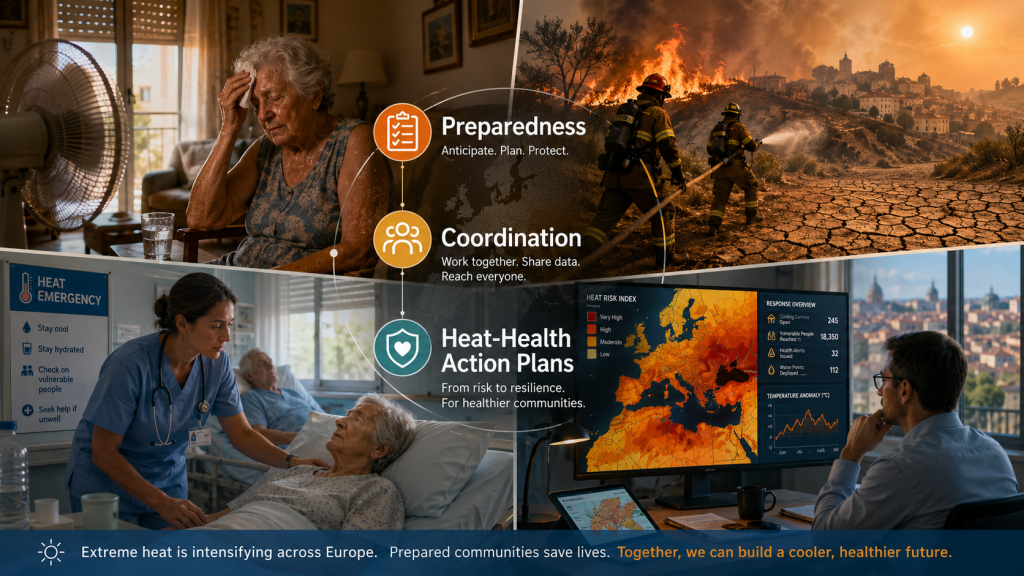
These developments closely reflect the work of healthRiskADAPT. The project addresses heatwaves together with air pollution, wildfire emissions and pollen, recognising that climate-related health risks do not occur in isolation. By combining hazard information, vulnerability assessment, health indicators, user-driven tools and locally relevant adaptation options, healthRiskADAPT aims to help authorities and communities move from risk awareness to informed action.
The 2026 heatwaves are a clear reminder that climate adaptation is already a public-health necessity. Better data, stronger preparedness and practical local action can reduce avoidable illness and deaths while helping European communities become healthier, fairer and more resilient.
Sources: World Health Organization Regional Office for Europe; World Meteorological Organization; European Climate and Health Observatory. Images are creaed with AI.